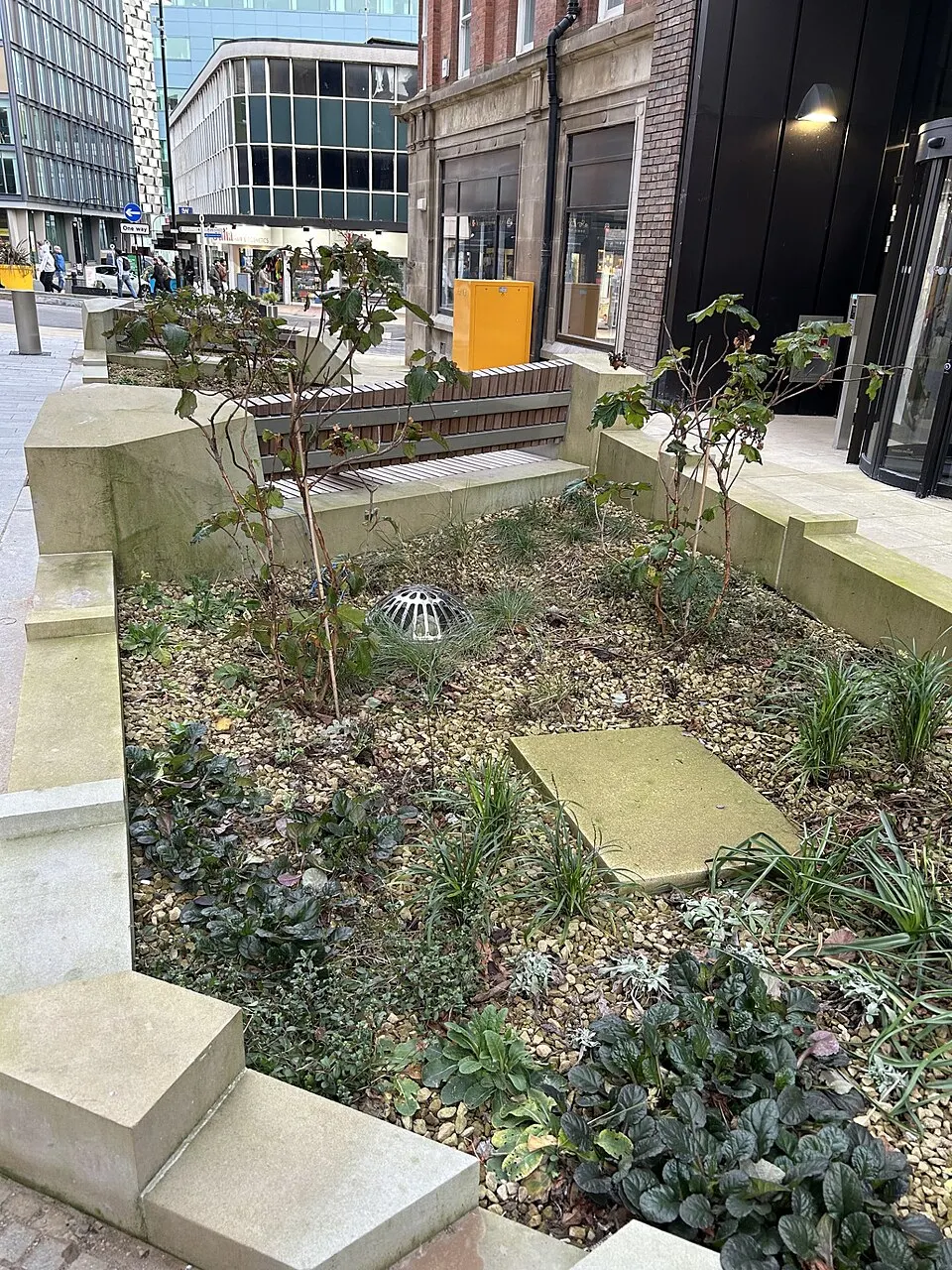

Observe the route of stormwater
A rain garden should begin with a map of runoff, not a planting list. Around a British home, note which surfaces shed water, where it collects and where it already drains. Observe several rain events and distinguish ordinary garden moisture from a leaking service or building defect.
Identify constraints before digging
Consider foundations, underground services, neighbouring land and existing drainage arrangements. Check local requirements and seek appropriate design advice where infiltration or overflow could affect buildings. A low area beside a wall is not automatically a suitable place to direct additional water.
Plan for excess as well as normal rain
Ask what happens when the proposed feature is full. An intentional, acceptable overflow route is as important as the planted area itself. Consider maintenance access and how accumulated debris will be removed. Do not disconnect a downpipe without understanding the consequences for the existing system.
Choose plants after the site assessment
Select plants suited to the expected conditions and local environment, including periods between rainfall. Start with a design you can maintain. Record how it behaves after installation and correct unexpected ponding or overflow promptly rather than trying to disguise a drainage problem with more planting.